This has become one of the most common questions our agency has answered over the years. So, we wrote this article to explain the differences between organic social posts and paid ads on social platforms.
First, a little backstory.
In the early days of Facebook, things were simple. If you followed a page or were friends with someone, you had a pretty good chance of seeing their posts. As the platform grew and more businesses started using Facebook to generate leads and sales, things changed.
Facebook created a clear separation between personal pages and business pages. A Facebook Business Page represents a brand or company and highlights the services it offers, while a personal page is meant for sharing life updates and connecting with friends and family. Along with that distinction came changes to how content was shown.
Around the same time, Facebook introduced its advertising platform and began shifting focus away from organic opportunities for businesses and toward paid promotion.
As a result, Facebook updated its algorithm starting in 2017, significantly reducing organic reach for business pages. On average, a post made on a business page now reaches only about 5–6% of its followers organically. That means if your page has 500 followers, a typical post may only be seen by around 25–30 people.
What does this mean for businesses?
As organic reach declined, business owners were forced to rethink how they show up on social platforms. Facebook’s ad tools enabled businesses to target specific audiences with paid content, prompting many owners to weigh the time and effort required to create organic posts against the cost and return of running ads.
This is often where a broader Social Media Marketing strategy comes into play, especially when deciding how much effort should go toward organic content versus paid promotion.
Organic efforts can still be effective, but they tend to move more slowly. While organic posting doesn’t require ad spend, it does require consistency, experimentation, and experience to deliver real results.
Organic Media: Building Sustainable Relationships
Organic media refers to the content you post directly on your social media profiles. When you post organically, your content is shown to a small percentage of your existing followers, based on how the platform’s algorithm determines relevance.
Benefits:
Posting organically helps keep your current audience engaged and informed.
Best use cases:
Sharing updates about new products or services, promotions, events, or company news.
Not great for:
Reaching people who don’t already follow your business.
Organic posting remains a solid way to build awareness and maintain relationships with your existing audience, but it has clear limitations when it comes to attracting new customers.
Paid Media: Amplifying Your Reach
Paid media involves running ads on platforms like Facebook and Instagram to reach users beyond your existing followers. Using tools like Meta Business Suite, businesses can target audiences based on location, interests, behaviors, and more.
This is where Paid Media becomes especially valuable. Paid ads allow you to introduce your business to people who may not know you yet, drive traffic to your website, generate leads, and support conversions.
Benefits:
Reaches new audiences, is data-driven, and allows for precise targeting.
Best use cases:
Increasing awareness and promoting new products or services.
Not great for:
Building ongoing relationships with current followers.
While paid social is effective for reaching new customers, it requires a financial investment and the expertise to manage campaigns properly.
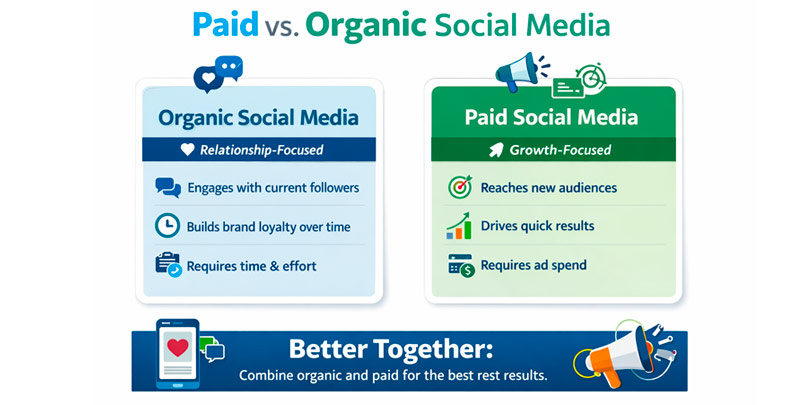
Finding the Perfect Balance: Paid & Organic Media
The most effective social and digital marketing strategies don’t rely on just one approach. Instead, they balance organic and paid efforts.
Organic content helps keep your current audience informed and engaged, while paid ads help expand your reach and attract new customers. When these efforts are aligned within a larger Digital Marketing Strategy, social media becomes more consistent, more measurable, and more effective.
For businesses that want steady visibility rather than short bursts of attention, pairing social efforts with a broader Always-On Marketing approach helps maintain momentum over time.
Ready to dive deeper into the differences between paid and organic media and understand how they can impact your business? We’re here for you! Contact us today! You can learn more about our digital marketing services here.