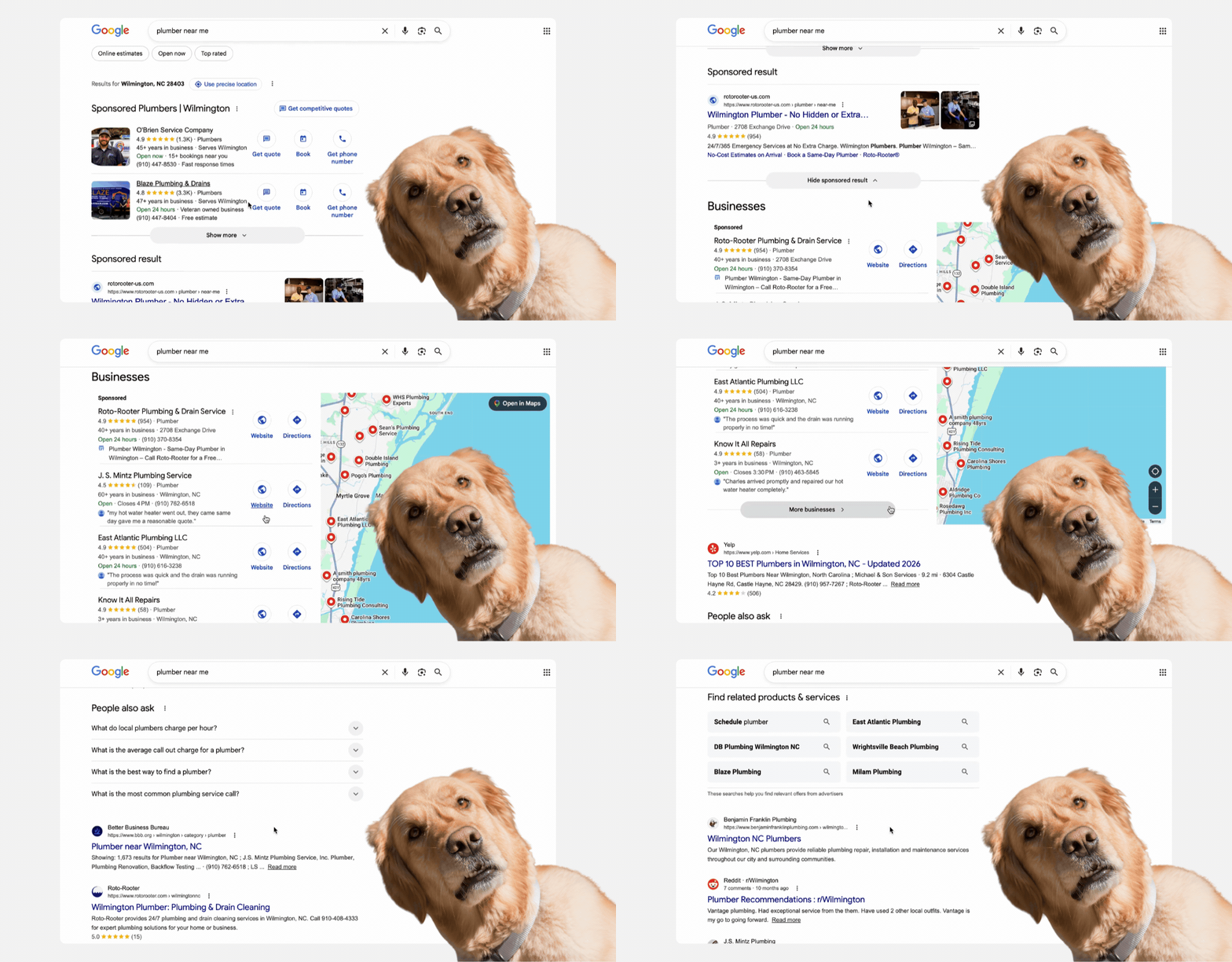
We’ve been having the same conversation more and more lately. A client hops on Google to search for their business, a competitor, or a service they offer, and something just feels different. The page doesn’t look like it used to. There’s more going on. More sections. More choices. And in many cases, their website isn’t showing up where they expect it to.
And honestly, they’re right.
We’ve been involved in the search marketing business for over 20 years, and we’ve seen Google change a lot. What used to be a pretty clean list of search results has evolved into something that features many more opportunities. Today, it’s a mix of ads, maps, featured snippets, AI-generated answers, and Google’s own content, with organic listings sometimes pushed further down the page than ever before.
At the core of it, Google isn’t just a search engine anymore. It’s moving towards becoming an answer engine. That shift has made it harder to find exactly what you’re looking for, and it’s changed how businesses show up online in a big way.
The businesses that are winning right now aren’t just ranking. They’re showing up in multiple places across the page. We want to help you understand how the search results page is actually laid out today and where your business can realistically appear within it. Once you see how it’s structured, it becomes much easier to spot the opportunities.
Key Article Takeaways:
- The Google search results page looks very different from what it did even a few years ago, and understanding what’s on it is the first step toward showing up more effectively.
- Not every section is available to every business. Some, like Local Service Ads, are industry-specific. Others, like AI Overviews and the Local Pack, apply to most.
- Paid placements (Search Ads and LSAs) can get you to the top of the page quickly, but visibility disappears the moment you stop paying.
- Unpaid sections like organic results, the Local Pack, and People Also Ask take longer to build, but they compound over time and don’t require a continuous ad budget.
- Your Google Business Profile influences multiple sections of the results page, including the Local Pack and the Knowledge Panel. Keeping it accurate and active is one of the highest-return things a local business can do.
- AI Overviews are changing how users interact with search results. Being a source Google trusts and cites is becoming just as important as ranking.
- Visibility isn’t one thing anymore. It’s a collection of places you can show up, each with its own rules.
The Sections You’re Looking At (And What They Actually Mean)
Before we get into each one, here’s something worth keeping in mind: not every section appears on every search. What populates depends on the query; what someone types, how they type it, and what Google decides is most useful for that specific search. A search for “best restaurants near me” looks completely different from a search for “Wilmington web design company.” The page is dynamic, and it’s always adjusting.
It’s also worth noting that some sections are industry-specific and won’t apply to every business. Google Hotel Ads, for example, surface specifically for hospitality-related searches. Flight results, top news stories, job listings, and recipe cards are a few others.
That said, here are the main sections most businesses will encounter and what you need to know about each of them.
Paid Search Ads (Sponsored Results)
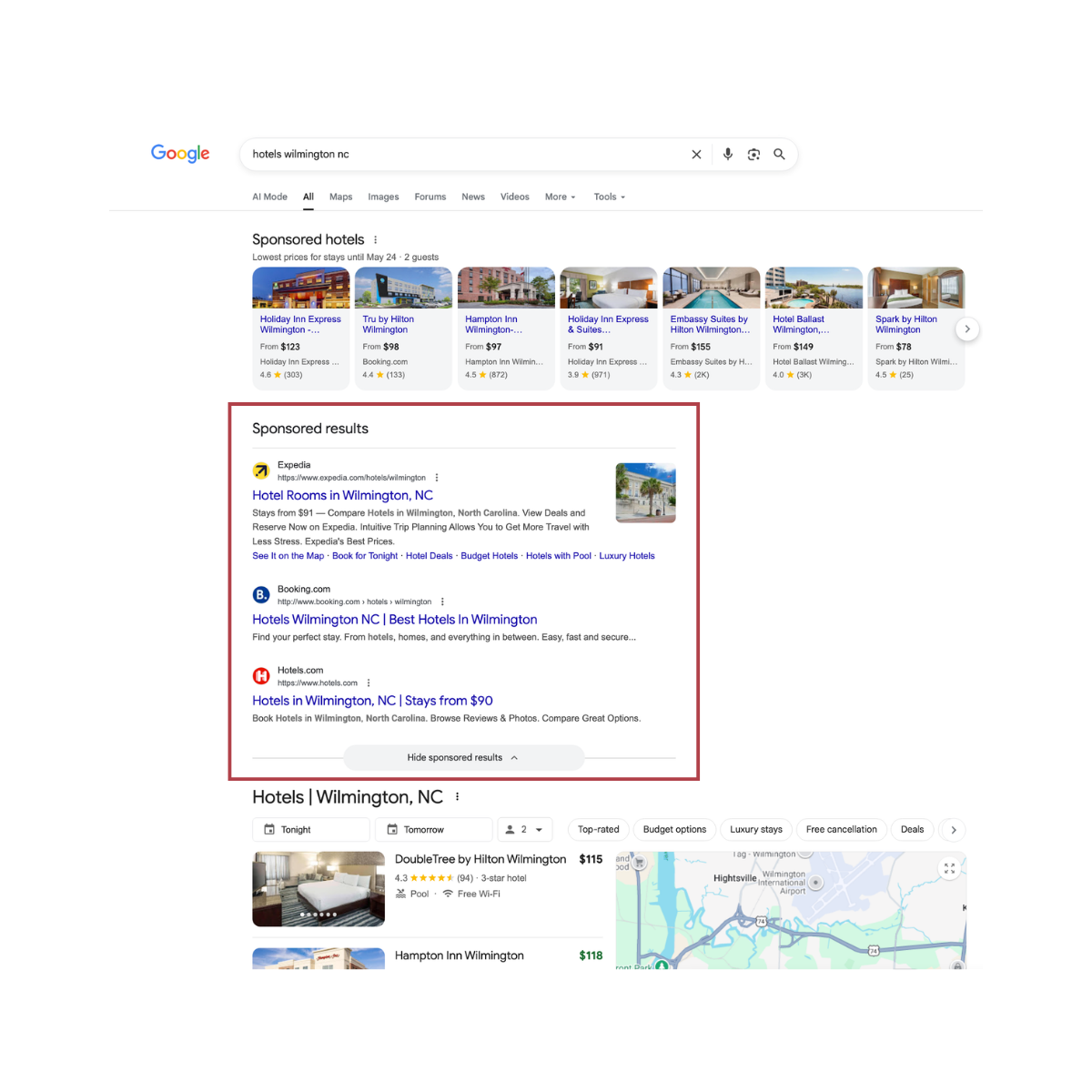
What it is: These are advertisements that businesses pay to show up at the top of the results page and sometimes at the bottom. They look a lot like organic results, but they carry a “Sponsored” label.
Paid or unpaid? Paid. Advertisers bid on specific keywords through Google Ads, and they pay each time someone clicks.
How you show up here: You run a Google Ads campaign and bid on keywords relevant to your business. The position you get depends on your bid, your budget, and the quality of your ad and landing page. You can be live on the first page of Google within a day if you’re willing to pay for it.
What to know: For competitive searches like “Wilmington HVAC company” or “divorce attorney near me,” there can be three or four paid ads before a single organic result appears. Users do click on ads, especially for transactional searches where they’re ready to buy or call. But the moment you stop paying, you stop showing up. It’s visibility you rent, not own.
Local Service Ads (LSAs)
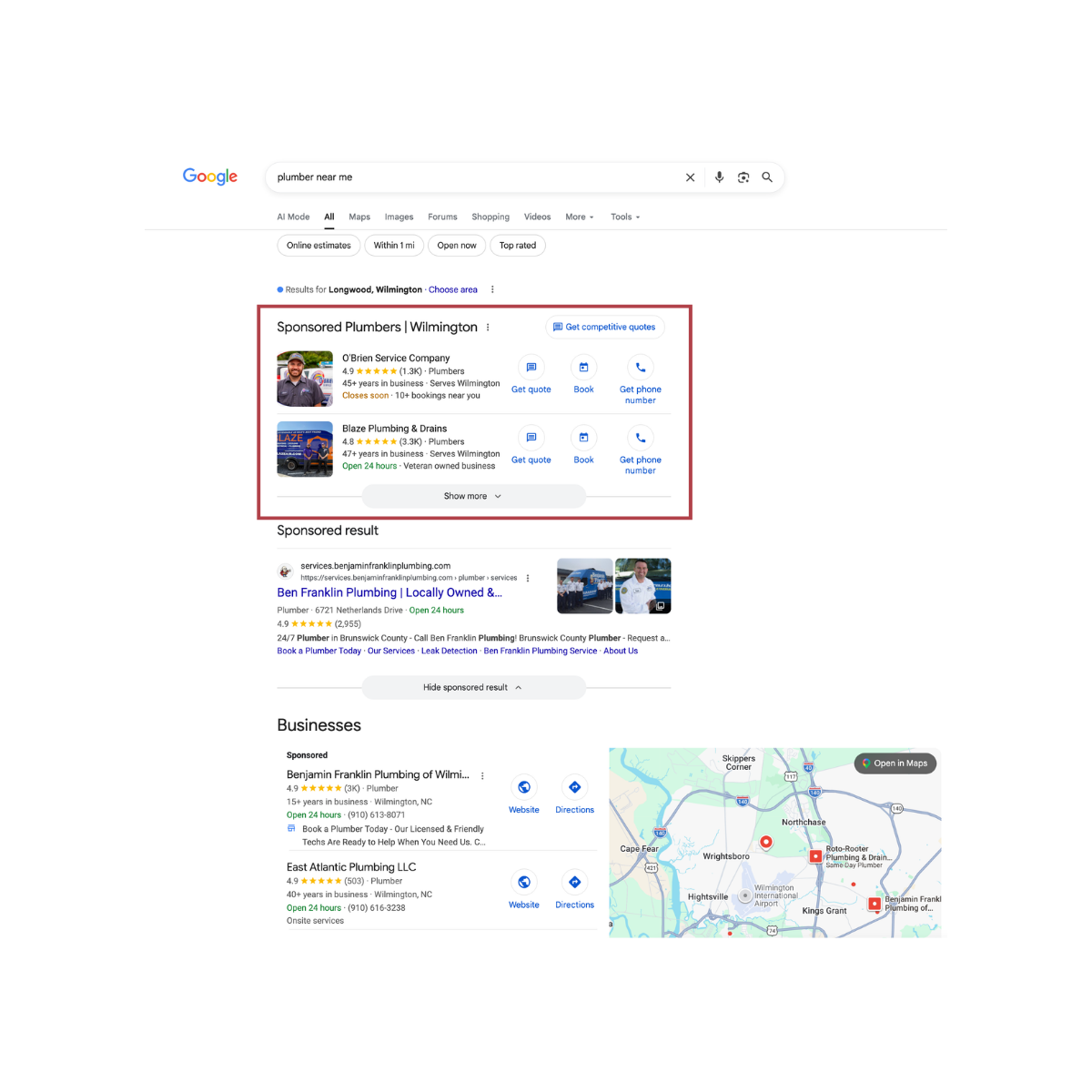
What it is: Local Service Ads are a separate ad format designed specifically for service-based businesses. They appear at the very top of the results page, above traditional paid search ads, and show a handful of local providers with their name, rating, number of reviews, and a direct call or message option. You’ve likely seen them if you’ve ever searched for a plumber, an electrician, an HVAC company, or a similar service.
Paid or unpaid? Paid, but the billing works differently from traditional Google Ads. Instead of paying per click, you pay per lead, meaning you’re charged when a potential customer calls, messages, or books through the ad directly.
How you show up here: You apply through Google’s Local Services platform, go through a verification process that includes background checks and license verification, depending on your industry. From there, your ranking within LSAs is influenced by your reviews, responsiveness, and proximity to the searcher.
What to know: For home service businesses, LSAs are one of the most direct paths to new leads on Google. The pay-per-lead model makes them easier to evaluate from an ROI standpoint than traditional ads. If you’re an HVAC company, roofer, plumber, or similar trade, and you’re not running LSAs, you’re likely watching competitors collect leads from the very top of the page while you’re competing further down.
Shopping Results
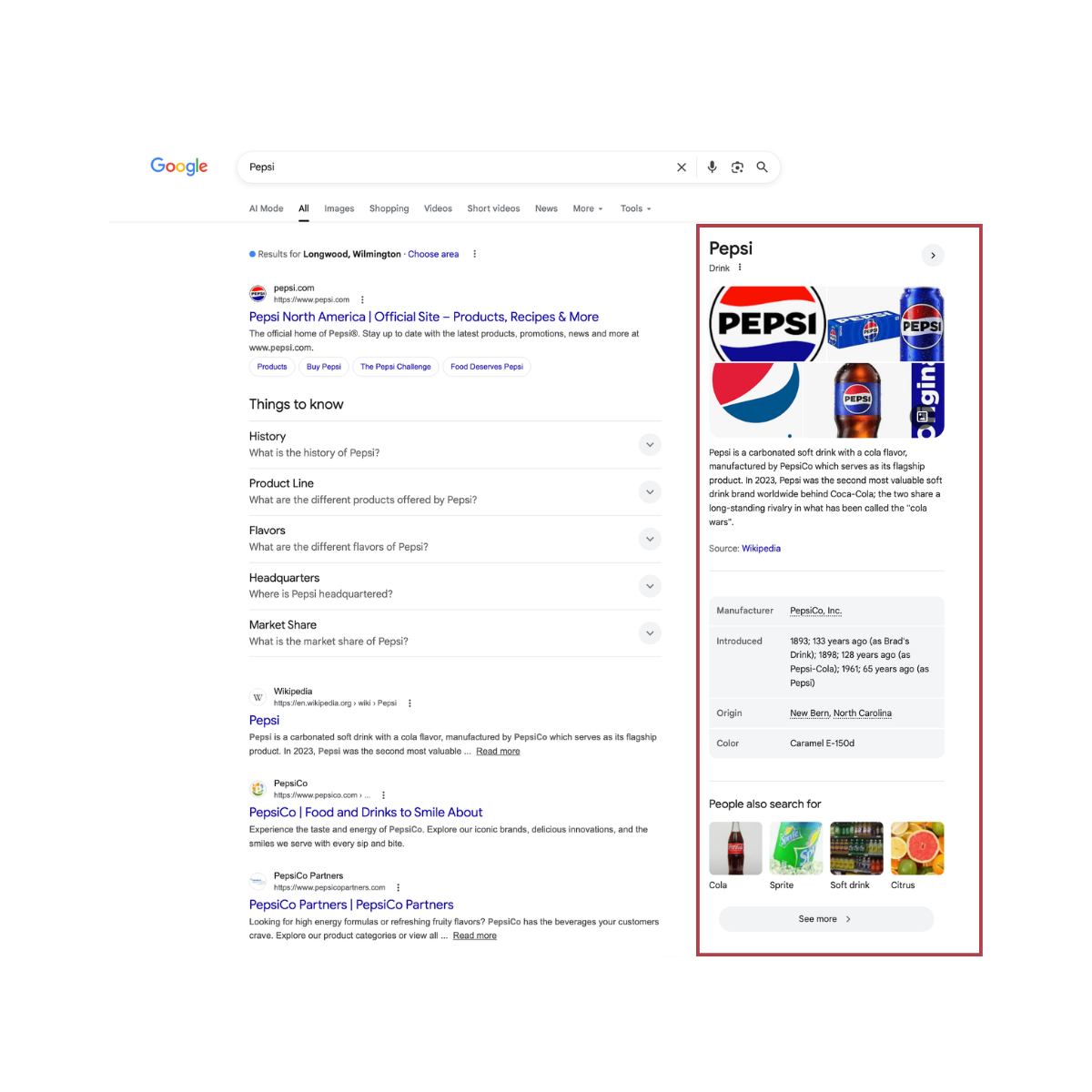
What it is: For product-based searches, Google often surfaces a row of product images with prices and retailer names at the top of the page. These are Shopping ads, and they’re specifically designed for e-commerce.
Paid or unpaid? Primarily paid, though Google does include some free product listings from Google Merchant Center.
How you show up here: You connect your product catalog to Google Merchant Center and run Shopping campaigns through Google Ads. Relevance, pricing, product data quality, and your bid all influence placement.
What to know: If you sell physical products online, Shopping results can be more effective than text ads because users see the product image and price before they click. For service-based businesses, this section typically won’t appear.
AI Overviews
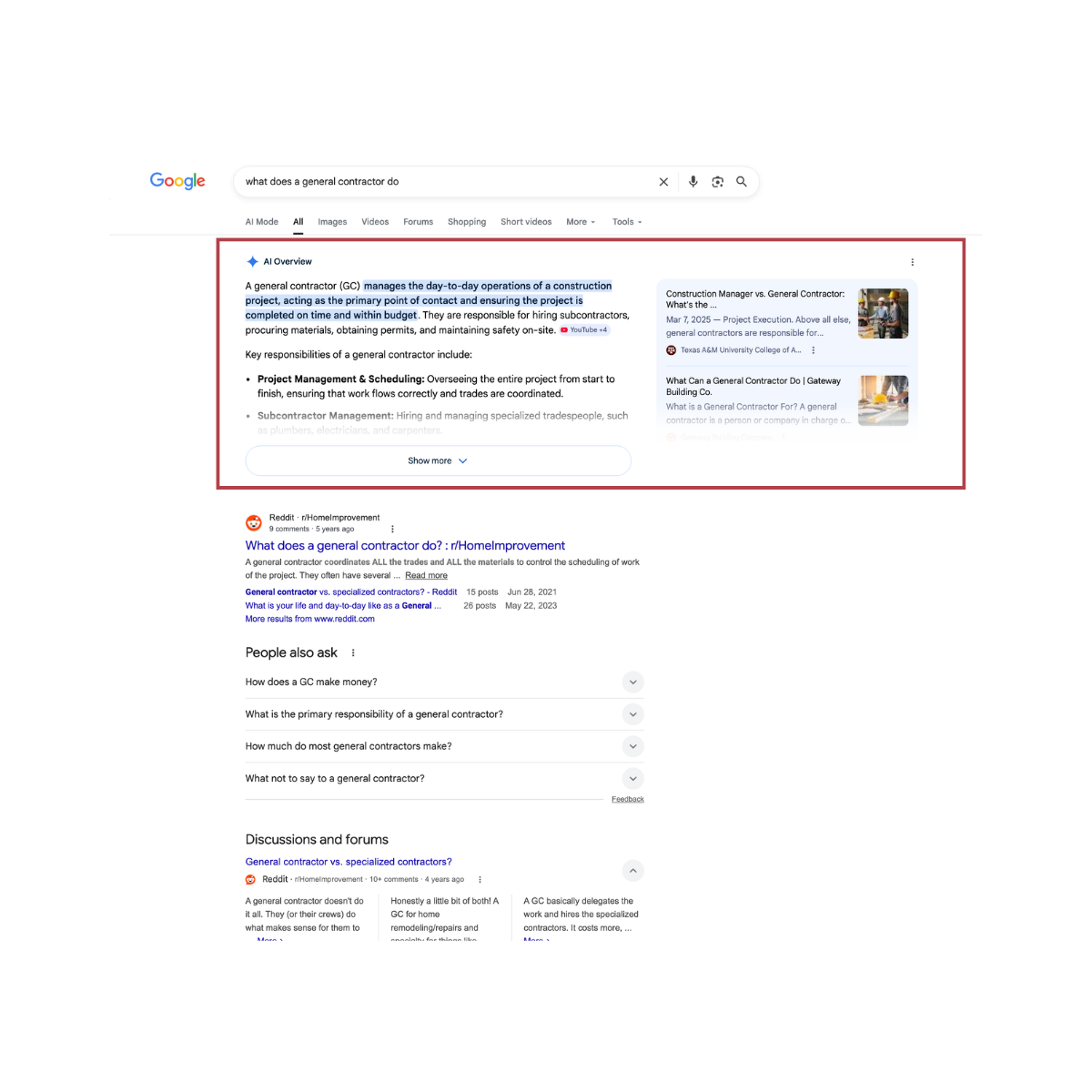
What it is: This is the AI-generated summary that now appears near the top of many search results. Google’s Gemini AI pulls information from across the web and synthesizes it into a paragraph or two that attempts to answer the search query directly without the user ever clicking a link.
Paid or unpaid? Unpaid. You can’t pay to appear here.
How you show up here: This is where things get nuanced. Google selects sources it considers credible, well-structured, and relevant to the query. Having strong SEO, clear and helpful content, and a trustworthy website gives you the best chance of being cited. But there’s no guarantee, and you have no direct control over whether your site is referenced.
What to know: AI Overviews have become one of the most significant changes to search in years. When Google answers the user’s question upfront, fewer people scroll down, and fewer click through to websites at all. This is what the industry calls “zero-click search,” and it’s reshaping how businesses think about content. The goal isn’t just to rank anymore; it’s to be the source Google trusts enough to cite.
Local Pack (Google Maps Results)
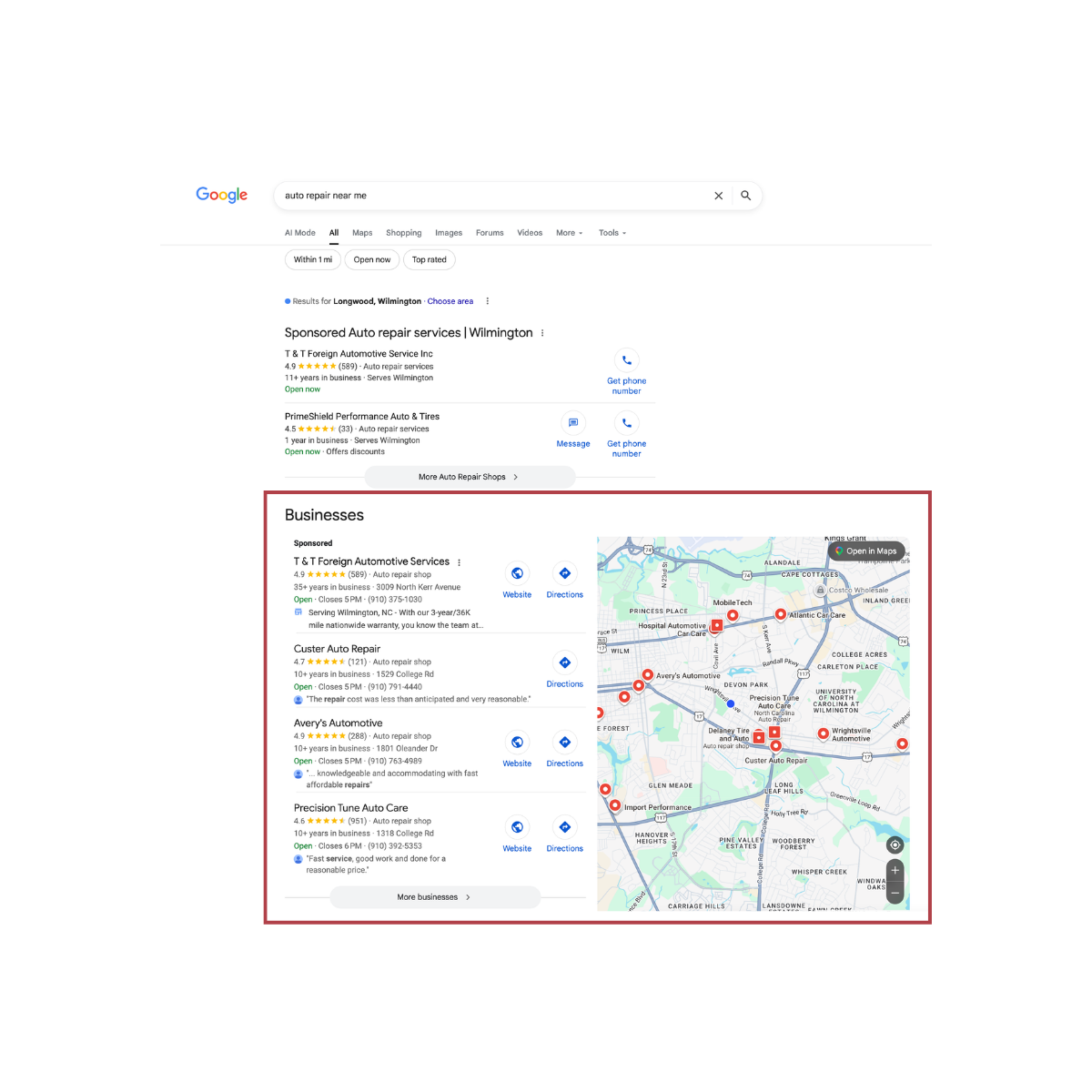
What it is: When someone searches for a local business or service, Google often surfaces a map alongside a block of three business listings. This is called the Local Pack or the Map Pack, and it’s one of the most valuable pieces of real estate on the results page for any business that serves a specific area.
Paid or unpaid? The standard Local Pack results are unpaid, but Google does allow paid placements within it, which show up with a “Sponsored” label.
How you show up here: Your Google Business Profile is the key. Claiming and optimizing your profile, keeping your hours and contact information accurate, collecting Google reviews, and having consistent business information across the web all contribute to your local ranking. Location matters too. Proximity to the searcher is a factor Google weighs heavily.
What to know: For service-based local businesses, showing up in the Local Pack can be more valuable than ranking #1 in organic results. It’s visible, it shows your rating and reviews, and on mobile, it gives users a one-tap option to call or get directions. If you haven’t invested time in your Google Business Profile, this is one of the highest-return things you can do.
Knowledge Panel
What it is: That box that sometimes appears on the right side of the desktop results page (or near the top on mobile) with information about a business, person, or organization. For local businesses, it typically shows your name, address, phone number, hours, photos, and reviews pulled from your Google Business Profile.
Paid or unpaid? Unpaid.
How you show up here: For established businesses, Google often generates a Knowledge Panel automatically once you have a verified Google Business Profile. Keeping that profile complete, accurate, and active is what makes the panel useful. The more information Google can confidently pull, the more robust the panel becomes.
What to know: When someone searches your business by name, this is often the first thing they see. It’s Google’s snapshot of who you are. If your hours are wrong, your phone number is outdated, or you have unanswered reviews, that’s the impression you’re leaving. Treating your Google Business Profile like a living part of your marketing, not a one-time setup, matters more than most business owners realize.
People Also Ask
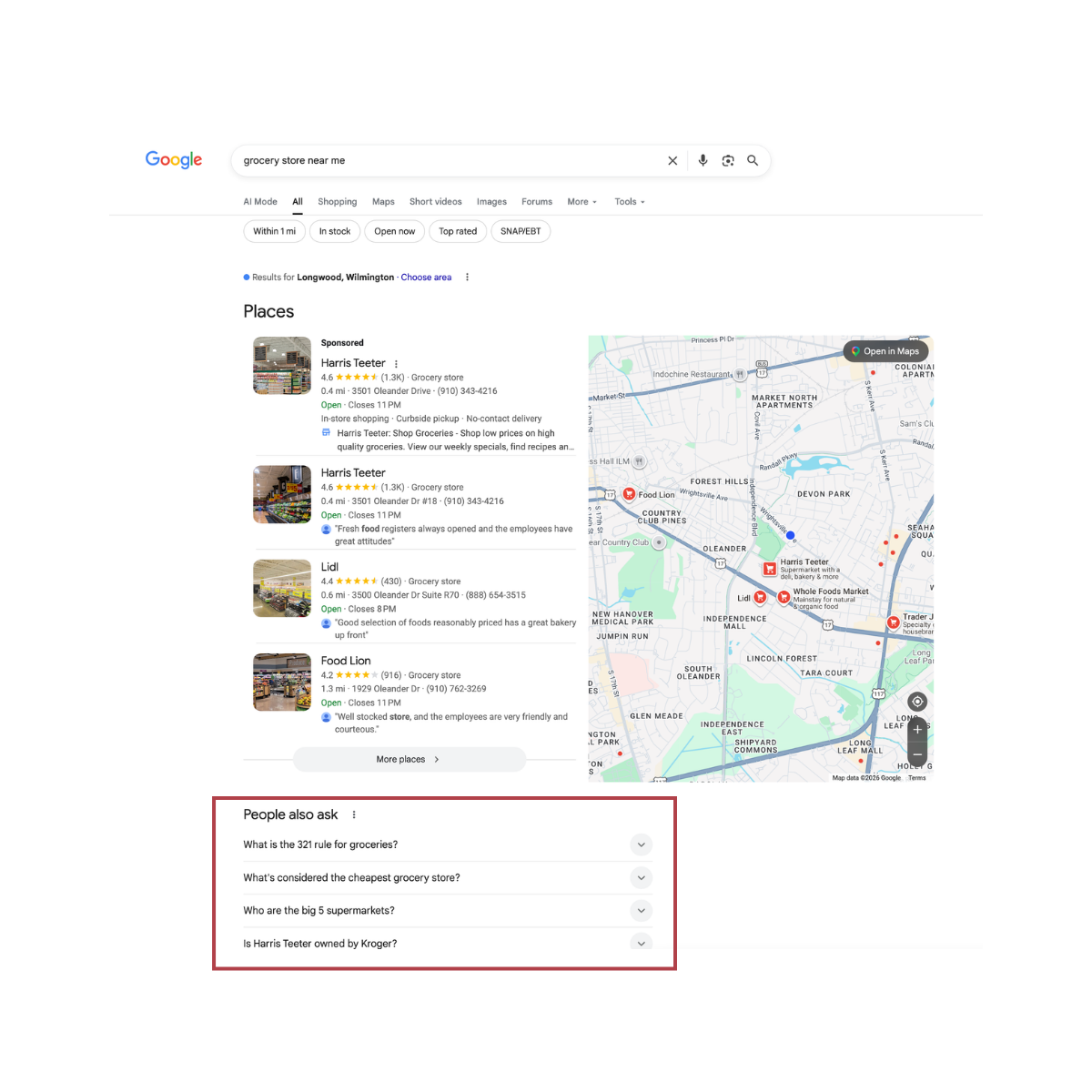
What it is: This is an expandable section that displays a list of related questions that other users have searched for. When you click on one, a short answer drops down, usually pulled directly from a website, along with a link to the source.
Paid or unpaid? Unpaid.
How you show up here: There’s no direct way to target People Also Ask, but writing content that clearly and directly answers specific questions is your best path. FAQ sections, blog posts structured around questions, and content that gets to the point quickly all have a better shot at appearing here.
What to know: People Also Ask is useful from a marketing perspective because it shows you exactly what your potential customers are wondering. If you search your service and see questions popping up that your website doesn’t answer, that’s a content opportunity. It’s also a way to show up on the results page even if your main pages aren’t ranking at the top yet.
Organic Results
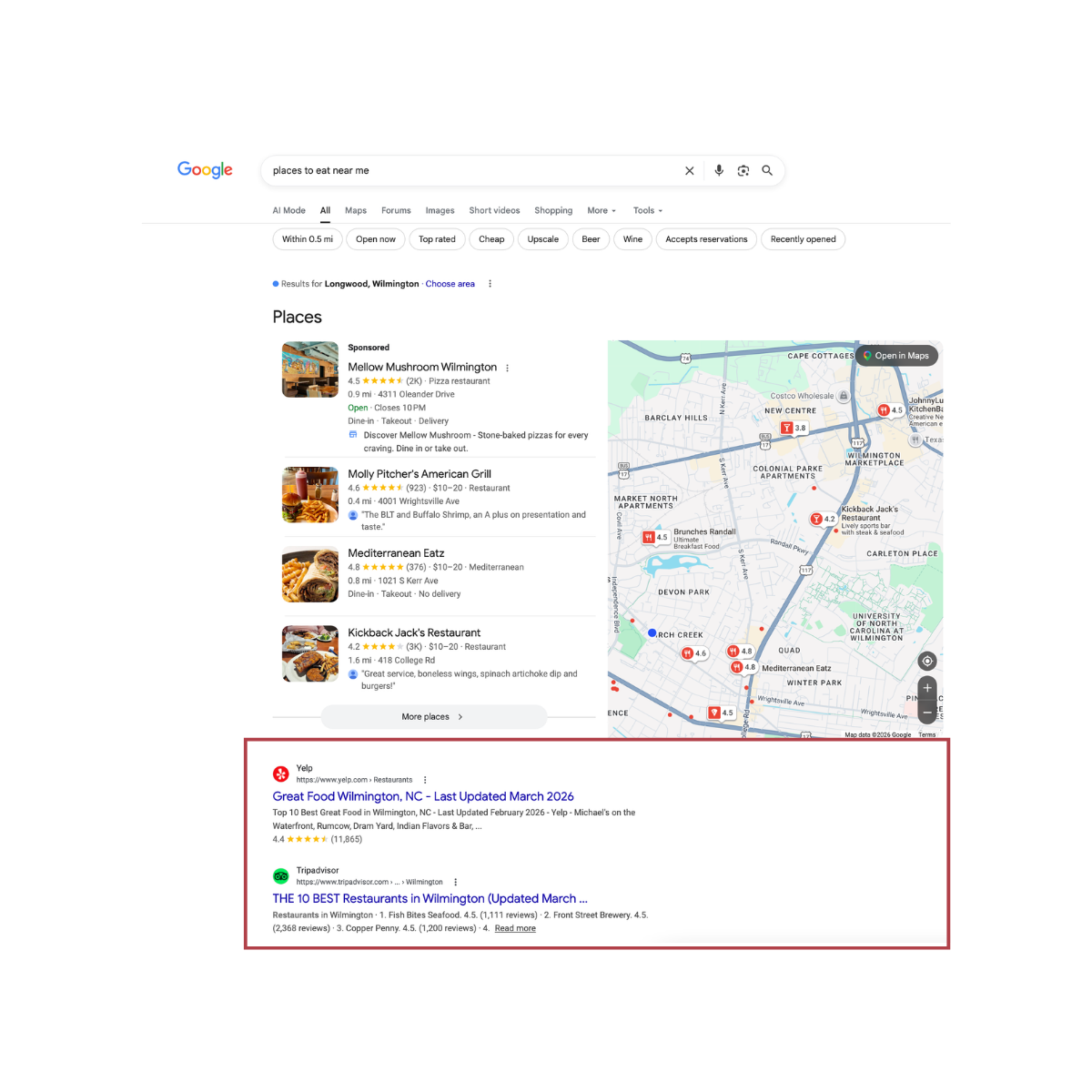
What it is: Last but not least, these are the traditional website listings. The “ten blue links” that Google built its reputation on. They appear based on Google’s algorithm, which evaluates hundreds of factors to determine which pages are the most relevant and trustworthy for a given search.
Paid or unpaid? Unpaid. You cannot pay to appear here.
How you show up here: This is what SEO (search engine optimization) is all about. It comes down to the quality and relevance of your content, the technical health of your website, the number and quality of other sites that link to you, how well your site performs on mobile, page speed, and more. It takes time to build, but it also has staying power that paid ads don’t.
What to know: Organic rankings have become harder to win because there’s more competing for space above them; ads, AI Overviews, Local Packs, and other features all push organic results further down the page. That doesn’t mean SEO isn’t worth pursuing. It absolutely is. But it does mean that organic search is one piece of a broader visibility strategy, not the whole picture.
So, What Does It All Mean for Your Business?
The search results page is no longer a level playing field where the best website automatically wins. It’s a layered system with multiple entry points, and your job is to understand where you have an opportunity and where you don’t.
For most local businesses, the highest-priority areas are the Local Pack, organic results, and paid ads for competitive keywords. Beyond that, making sure your Google Business Profile is dialed in, your website answers real questions people are asking, and your content is structured in a way that AI systems can easily understand and reference are the investments that compound over time.
Visibility isn’t one thing anymore. It’s a collection of places you can show up, each with its own rules. If you’re looking at the results page for your business and feeling like you’ve got some gaps to fill, that’s exactly what we help with. Let’s talk.