Working in marketing means I look at emails from two perspectives: as someone who helps businesses create them and as someone trying to get through his inbox. Sometimes I stop to appreciate the design. Other times, a few lines of text and a good offer do the job.
The emails that earn my attention usually have something in common. I recognize the sender, the message gives me a reason to care, and I don’t have to work to figure out what to do next.
These examples take different approaches, but each offers something worth borrowing for your own email marketing.
1. The Straight-to-the-Point Offer
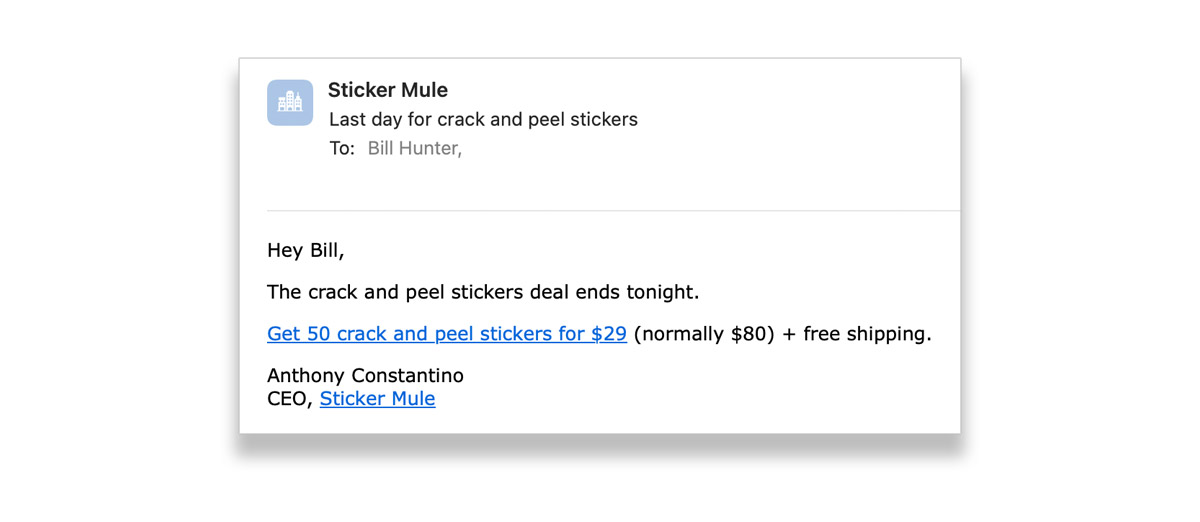
There’s something refreshing about an email that respects your time. Sticker Mule does that well in this example: a short greeting, a specific offer, a deadline, and a link.
What gets my attention
The subject line, “Last day for crack and peel stickers,” tells me what the message is about before I open it. Inside, the offer is equally direct: 50 stickers for $29, compared with the stated regular price of $80, plus free shipping.
There’s no hunting for a promo code or scrolling through unrelated products. The offer itself is the link. The personal greeting and signature also give this text-focused email the feel of a direct message rather than a heavily designed promotion.
What your business can borrow
Build the email around one offer and make the important details easy to find. An HVAC company could use this approach for a seasonal maintenance special. A builder could feature an incentive on a specific move-in ready home, with a link to the listing.
You don’t always need a large graphic or elaborate layout. A brief message is worth testing, especially when the offer is strong enough to carry the email. Include any conditions and use a deadline only when there’s an actual reason for it.
2. The Useful Insight
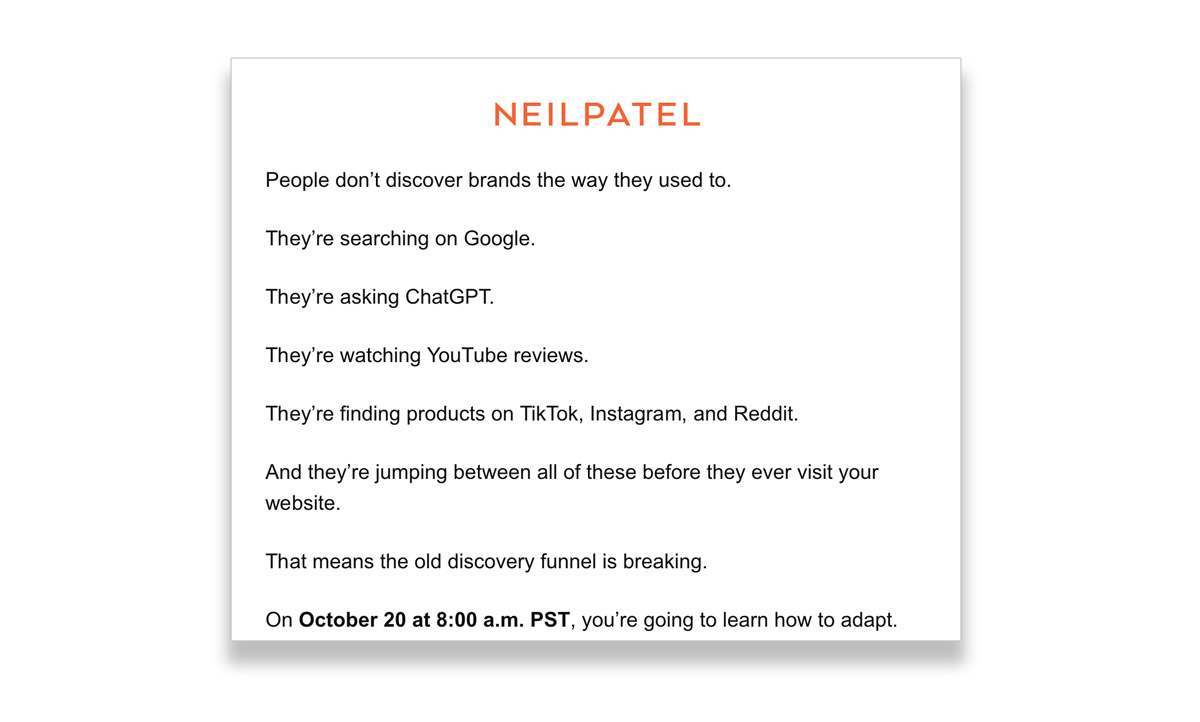
Some emails get my attention by pointing out a change or problem that matters to my work. This Neil Patel example starts with an observation about how people discover brands, then connects it to an upcoming educational event.
What gets my attention
The message moves through familiar places people look for information: Google, ChatGPT, YouTube, and social platforms. Short paragraphs make it easy to follow, and the topic gives me a reason to keep reading.
The invitation comes after the context. By the time the email introduces the event, I understand what it intends to help me learn. That’s more compelling than opening with a generic request to register.
What your business can borrow
Start with a question or concern your customers recognize, then offer a useful next step.
For a builder, that could mean explaining what buyers should know before choosing a homesite, followed by an invitation to tour the community. An HVAC company could explain why some rooms feel uncomfortable, then link to an article about possible causes.
Give readers enough information to understand why the topic matters. The email should offer some value even if they don’t click immediately.
3. The Visual Showcase
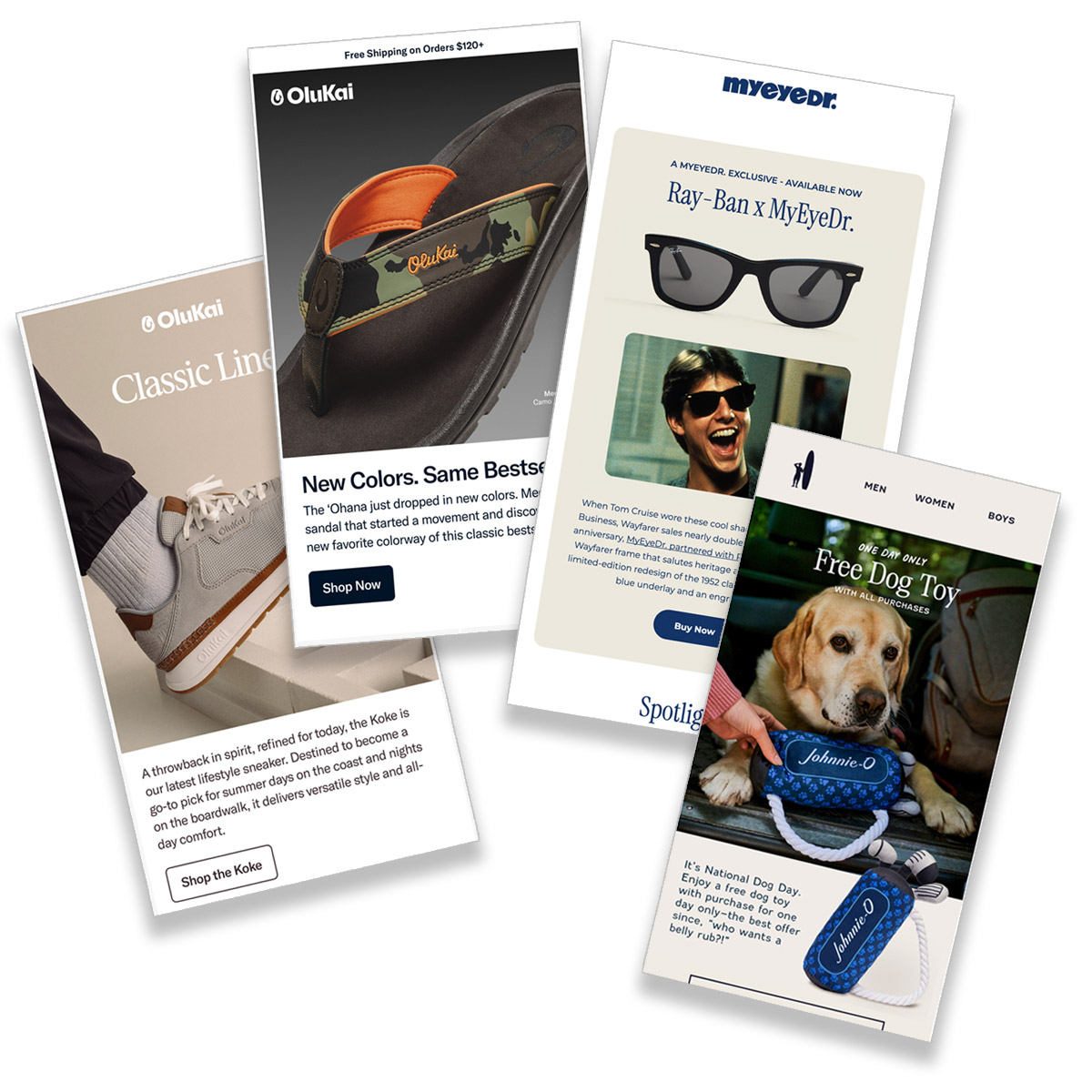
Some emails make their point through photography and design. The OluKai, MyEyeDr., and johnnie-O examples each give the reader something specific to notice, whether that’s a product detail, a familiar style, or a dog enjoying a new toy.
What gets my attention
OluKai gives its footwear room to stand out. Large product images let me see the materials, colors, and details, while the supporting copy provides context and a direct shopping link.
The MyEyeDr. email pairs Ray-Ban sunglasses with a recognizable movie reference, giving the product a story. Johnnie-O takes a different route, using a dog photo to introduce a dog-toy promotion. The image fits the offer and adds personality.
These emails give my eye a place to start. The photography draws me in, and the words explain what I’m looking at and why I might want it.
What your business can borrow
For builders, this approach is a natural fit. Feature a finished kitchen, an inviting porch, or a home’s setting, then connect the image to a benefit buyers care about. Include the details they need and a link to that specific home.
HVAC businesses can use visuals, too. A technician at work or a tidy installation can help show the people and care behind the service.
Keep essential information in text rather than embedding everything in an image, and check that the email is easy to read on a phone.
4. The Email With Personality
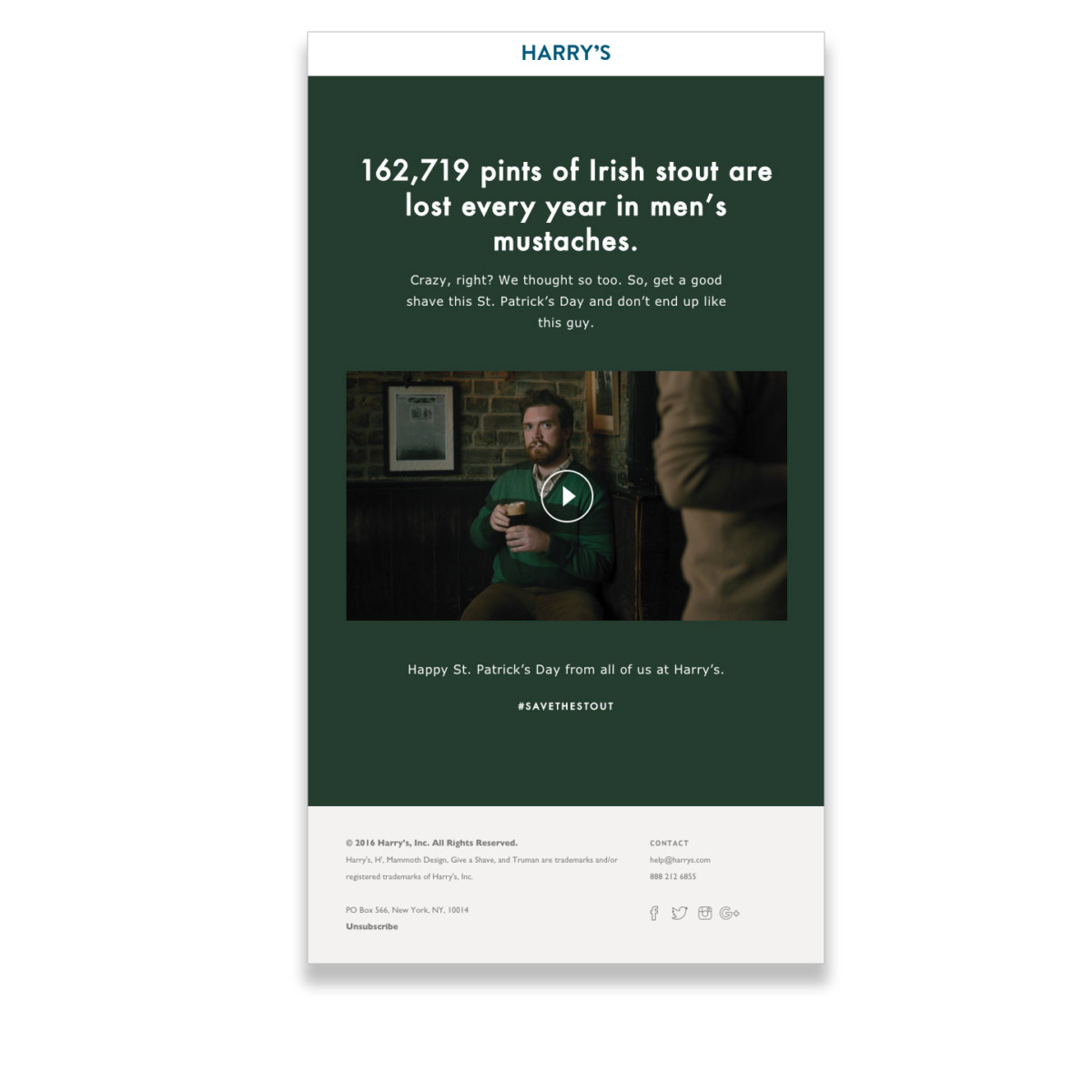
Harry’s takes a memorable approach in this St. Patrick’s Day email: a tongue-in-cheek claim about Irish stout getting lost in men’s mustaches. It’s an unexpected way to introduce a shaving-related message, and it fits the product.
What gets my attention
The joke gives the email a reason to exist beyond another holiday promotion. The green background, headline, and video preview all support the same idea, right down to the “Save the Stout” sign-off.
What I like is the connection. The humor relates to shaving, so the brand doesn’t have to force its product into an unrelated joke.
What your business can borrow
Let your company’s personality come through in a way that fits your audience. An HVAC company could have some fun with a thermostat disagreement or the first chilly morning of fall. A builder might reference a garage that’s become a storage unit instead of a place to park.
The humor should help people connect with the message. Keep the offer or next step understandable, and don’t force a joke into every campaign.
An Open Is Only the First Step
An email I enjoy isn’t automatically a high-performing campaign. These examples offer ideas worth testing, but results need their own review.
Open rates have limitations, and automated activity can affect both opens and clicks. Look at what happens afterward: replies, inquiries, tour requests, service appointments, or purchases.
Before sending, ask yourself whether the message is relevant, whether it delivers on the subject line, and whether readers know what to do next. Then decide how you’ll measure the outcome.
Give People a Reason to Read
The right approach depends on your audience and what you want the email to accomplish. Sometimes a product photo deserves the spotlight. Sometimes a useful explanation or a short offer is enough.
We help businesses plan, write, design, and manage email campaigns around those decisions. If your emails have become something you send because it’s been a while since the last one, let’s talk about giving them a more useful purpose.